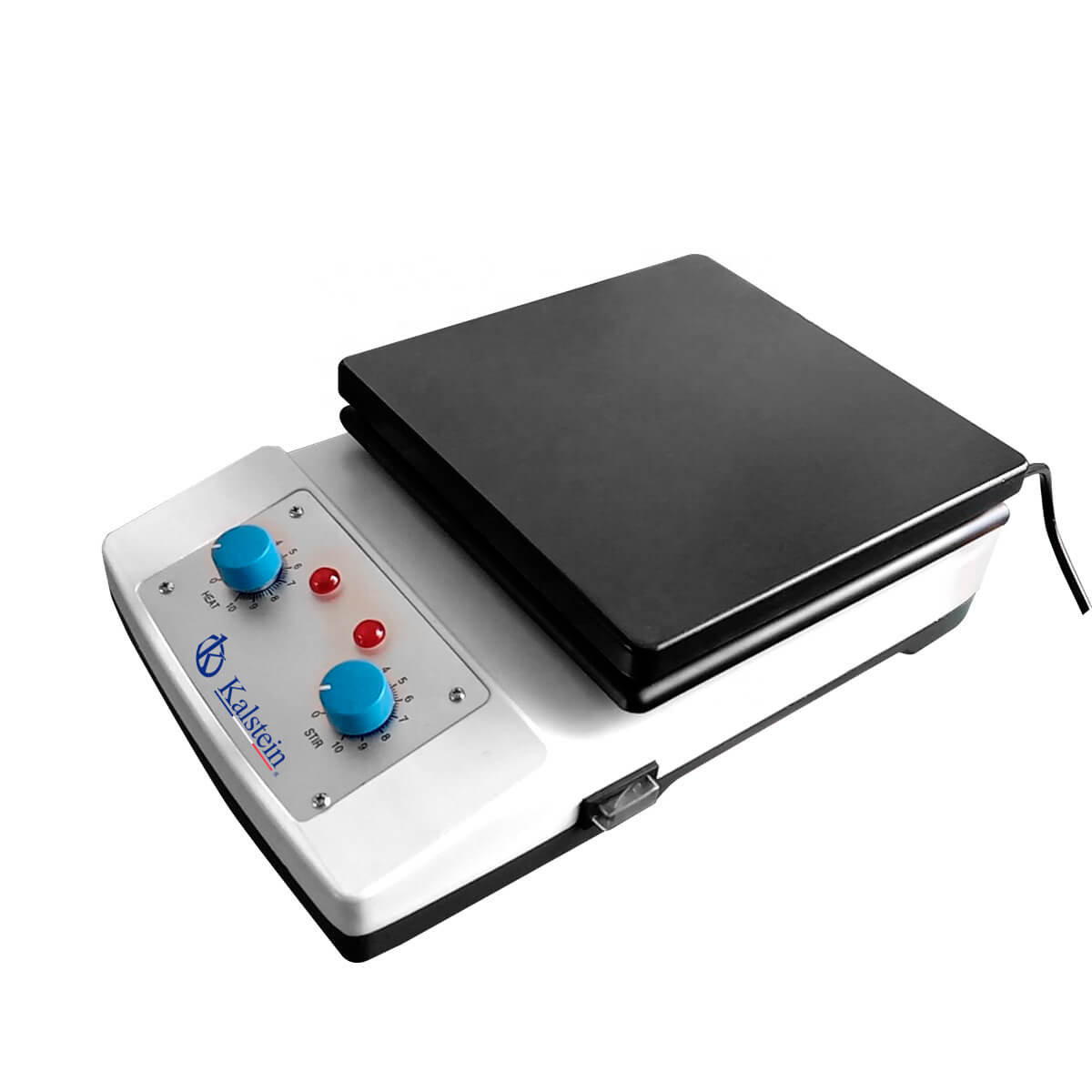
Understanding Measurements and Results Interpretation with the YR02935 Hotplate Stirrer
The YR02935 Hotplate Stirrer is an essential tool in laboratory settings, particularly for applications requiring precise thermal management and mixing. Understanding the measurements it provides is crucial for obtaining reliable results in various experiments and processes. This article focuses on how to interpret these results, ensuring operators maximize the utility of the YR02935.
Technical Specifications of the YR02935
| Specification | Details |
|---|---|
| Model | YR02935 |
| Heating Power (W) | 750 |
| Heating Plate Material | Ceramic Coated Aluminum |
| Temperature Range | Room Temperature to 380 °C |
| Mixing Speed Range | 100 - 1800 RPM |
| Volume Capacity | 10L |
| Dimensions (mm) | 500 x 400 x 350 |
| Weight (Kg) | 7.5 |
The Principle of Operation of the YR02935
The YR02935 employs magnetic stirring, which is preferred in many laboratory applications due to its quiet operation and efficiency. This unit utilizes a magnetic bar that is rotated to facilitate mixing, providing uniform temperature distribution across the heating plate. Understanding the principles behind magnetic stirrers helps operators appreciate the significance of their results and enhance their experimental accuracy.
The design of the YR02935 allows for low maintenance, as it contains no moving parts that can wear out, unlike motorized stirrers. The lack of external moving parts reduces the risk of contamination, making the YR02935 ideal for sensitive applications.
Interpretation of Measurements from the YR02935
Interpreting measurements from the YR02935 requires a solid understanding of the display indicators. The temperature reading is displayed digitally, allowing operators to monitor and adjust settings as needed. It's essential to understand the operational threshold and normal ranges for the specific substances being used. For example, many organic solvents have specific boiling points that must be respected to prevent evaporation or decomposition.
Additionally, the mixing speed is adjustable from 100 to 1800 RPM, and understanding how this speed affects the mixing process is vital. Higher speeds can lead to increased vortexes that may cause splashing, while lower speeds may not adequately mix denser solutions. Operators must thus interpret the need for adjustment based on the viscosity and volume of the solution being processed.
Common Misinterpretations of Results
One of the most common errors when using the YR02935 is misreading the temperature display. Operators should be aware that the displayed temperature is the temperature of the plate itself, which may not accurately reflect the temperature of the solution, especially in cases of thermal lag. Thus, it’s crucial to allow sufficient time for the solution to reach equilibrium before taking measurements.
Another misinterpretation can occur with the mixing speed. Operators may assume that higher speeds always yield better mixing results. However, for delicate solutions or those that foam easily, reducing the speed may be necessary to achieve the desired homogeneity without causing excessive aeration.
Site Requirements for Optimal Use of the YR02935
To ensure accurate results, certain site conditions are necessary for the YR02935. It should be placed on a flat, stable surface to avoid discrepancies in measurements due to vibration. Adequate ventilation is also required, especially when heating volatile substances. Understanding these site requirements can help avoid common pitfalls associated with incorrect installations.
- Ensure a level platform.
- Provide sufficient clearance around the unit for safety and heat dissipation.
- Maintain a humidity level below 80% to prevent condensation.
Sector Adaptations of the YR02935
The versatility of the YR02935 allows it to be used across various sectors:
- Clinical Laboratories: Ideal for preparing reagents and samples, ensuring accurate temperature control for sensitive biological materials.
- Industrial Applications: Used for material mixing and testing, especially in quality control processes.
- Food Safety Testing: Ensures precise temperature management when testing samples for microbial safety.
- Educational Purposes: Demonstrates fundamental principles of chemistry and physics in an academic environment.
Frequently Asked Questions
What are the best practices for using the YR02935 for temperature-sensitive experiments?
To handle temperature-sensitive experiments with the YR02935, always pre-set your heating temperature slowly to prevent thermal shock. Monitor the temperature frequently using calibrated thermometers to verify accuracy, and allow ample time for solutions to equilibrate.
How can I enhance the durability of my YR02935 Hotplate Stirrer?
Enhancing the YR02935's durability involves regular cleaning and maintenance. Ensure that spills are cleaned immediately, and check for any wear on the power cord. Avoid using abrasive materials on the heating plate to preserve its ceramic coating.
What should I do if the display shows an error code?
Refer to the user manual for a list of error codes. Typically, error codes indicate temperature sensor failures or overheating conditions. For instance, if the error relates to the temperature, check the sensor connections and calibrate if necessary.
Can I use the YR02935 for exothermic reactions?
Yes, while the YR02935 can handle exothermic reactions, it is crucial to monitor the temperature to avoid overheating. Set the maximum temperature lower than the expected temperature rise during the reaction.
What types of containers are suitable for use with the YR02935?
Any container that can withstand high temperatures and is compatible with magnetic stirring is suitable. Borosilicate glass beakers are commonly used for their thermal resistance and compatibility.
How often should I calibrate the YR02935 Hotplate Stirrer?
Calibration should occur periodically, ideally once every three to six months, or whenever there is a significant change in operational conditions or after repair. Use certified calibration equipment for accurate results.
What makes the YR02935 different from other hotplate stirrers?
The YR02935 stands out due to its ceramic-coated heating plate, which provides even heating and protects against corrosion. Its compact design and high mixing speed range also enhance its versatility in various applications.
If you are looking for a fusion of innovation and quality, you have come to the right place. At Kalstein, we offer you the luxury of exploring our exclusive catalog of laboratory equipment. We manufacture every device to the highest standards of excellence. Our intuitive and seamless online purchasing channels are designed for your convenience, securing the most competitive prices. Hesitate no longer — we bring science to life, it is time to become part of our community.