Salinity Refractometers: Applications in Research, Biotechnology, and Academia 2026
What is it used for in 2026
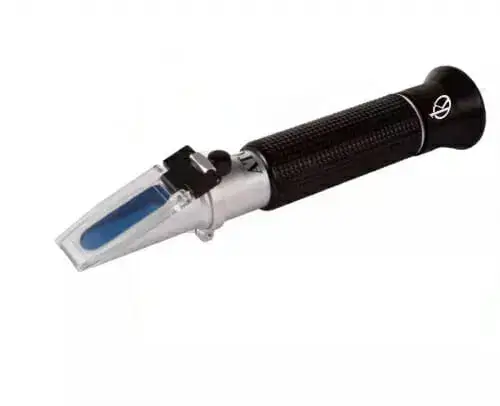
In 2026, salinity refractometers play a crucial role in determining the concentration of salt in various solutions, particularly in marine biology, aquaculture, and environmental monitoring. They are essential tools for ensuring water quality and salinity levels in aquaculture operations, which can directly affect fish health and growth rates. In research laboratories, they are employed to analyze samples in studies related to oceanography and saline ecosystems. Additionally, these devices aid in the formulation of saline solutions in clinical and veterinary settings.
History and evolution of the technology
The use of refractometry dates back to the 19th century when scientists first began to understand the light refraction properties of liquids. Over the decades, salinity refractometers have evolved from simple glass instruments to modern optical devices featuring advanced materials and technology, such as automatic temperature compensation (ATC) and digital displays. These advancements have increased their accuracy and user-friendliness, making them indispensable in various scientific fields.
How to use it step by step
To effectively use a salinity refractometer, follow these simple steps:
- Calibration: Begin by calibrating the refractometer according to the manufacturer’s instructions using a standard solution.
- Sample Preparation: Ensure the sample is homogeneous and free from bubbles or impurities.
- Placing the Sample: Drop a few drops of the sample solution onto the prism of the refractometer.
- Reading the Scale: Close the cover plate and look through the eyepiece to read the salinity or specific gravity directly on the scale.
- Record Results: Document the readings accurately for further analysis.
Best techniques and protocols
Best practices for using salinity refractometers include:
- Always calibrate the device before use to ensure accuracy.
- Use distilled water to rinse the prism between samples to prevent cross-contamination.
- Adhere to the manufacturer’s recommended temperature range for optimal performance.
- Conduct multiple readings and average them for better reliability.
Practical applications by laboratory type
Salinity refractometers find practical applications in various laboratory types:
- Marine Biology Laboratories: For assessing salinity in aquatic environments.
- Aquaculture: Monitoring water quality and salinity for fish farming.
- Environmental Monitoring: Analyzing salt levels in natural water bodies.
- Clinical Laboratories: Preparing saline solutions for medical applications.
Regulations, standards and certifications
Salinity refractometers should comply with laboratory standards such as ISO and ASTM to ensure reliability and accuracy. Laboratories must maintain certifications relevant to their field, as these ensure that equipment is calibrated and maintained according to industry regulations.
Comparison with alternative technologies
While salinity refractometers are widely used, alternative technologies like conductivity meters and hydrometers also measure salinity levels. Conductivity meters provide quicker results and are better suited for continuous monitoring, whereas hydrometers are more cost-effective but less precise compared to refractometers. Thus, the choice of technology often depends on the specific requirements of the laboratory or field.
Comparison of available models
| Model | Best for | Key specs | Recommended use case |
|---|---|---|---|
| YR05887 | Testing salinity in aquaculture | Salinity: 2-4% (20-40 ppt), Specific Gravity: 1.015-1.030 | Quality control in marine and clinical labs |
| YR05888 | Marine biology research | Salinity: 0-4% (0-40 ppt), Specific Gravity: 1.000-1.030 | Research on saline environments |
| YR05913 | Environmental testing | Salinity: 2-4% (20-40 ppt), Specific Gravity: 1.015-1.030 | Monitoring ecosystems and saline waters |
| YR05914 | Clinical applications | Salinity: 0-4% (0-40 ppt), Specific Gravity: 1.000-1.030 | Preparation of saline solutions |
Common mistakes and how to avoid them
Common mistakes include:
- Not calibrating the device regularly, which can lead to inaccurate readings.
- Failing to clean the prism, resulting in cross-contamination of samples.
- Using samples that are too warm or too cold, affecting the precision of measurements.
To avoid these issues, establish a routine that includes calibration, cleaning, and monitoring sample conditions.
Maintenance, calibration and good practices 2026
For optimal performance, salinity refractometers should be:
- Calibrated before each use and after any significant temperature changes.
- Cleaned with distilled water and dried with a soft cloth after each test.
- Stored in a protective case to prevent damage.
Cost-benefit analysis 2026
Investing in a salinity refractometer offers significant benefits, including accuracy, ease of use, and reliability. The initial cost is often offset by the ability to perform numerous tests with minimal maintenance. In the context of laboratory budgets, these instruments present a favorable return on investment due to their efficiency in quality control and research.
Frequently asked questions
What factors should I consider when choosing a salinity refractometer?
Consider the measurement range, accuracy, and additional features like automatic temperature compensation. Also, evaluate the specific application needs of your laboratory to ensure you select the right model.
How often should I calibrate my salinity refractometer?
It is advisable to calibrate your salinity refractometer before each use and whenever you notice discrepancies in readings. Regular calibration ensures accuracy and reliability in results.
Can salinity refractometers be used for liquids other than water?
Yes, while salinity refractometers are primarily designed for aqueous solutions, they can also be used for other liquids, provided they do not contain solids that can interfere with the measurement.
What should I do if my readings appear inconsistent?
If your readings are inconsistent, check the calibration, ensure the samples are free from bubbles, and verify that you are using the device within its specified temperature range.
How do I maintain my salinity refractometer?
Maintain your instrument by regularly cleaning the prism with distilled water, calibrating it before use, and storing it in a protective case to prevent physical damage.
Is there a significant difference between digital and analog refractometers?
Yes, digital refractometers generally offer more precise and easy-to-read results, while analog models may require more interpretation and are often less expensive. Your choice should depend on your specific needs and budget.
If you are looking for a fusion of innovation and quality, you have come to the right place. At Kalstein, we offer you the luxury of exploring our exclusive catalog of laboratory equipment. We manufacture every device to the highest standards of excellence. Our intuitive and seamless online purchasing channels are designed for your convenience, securing the most competitive prices. Hesitate no longer — we bring science to life, it is time to become part of our community.