Optical Surgical Navigation

Optical surgical navigation is revolutionizing the medical field by enhancing precision in surgical procedures. By utilizing advanced technology, these systems allow surgeons to visualize and navigate complex anatomical structures with remarkable accuracy. This leads to improved outcomes and minimized risks during surgeries.
Investing in optical surgical navigation systems can significantly enhance operational efficiency in your laboratory. Their ability to provide real-time data and imagery supports surgeons in making informed decisions, ultimately leading to better patient care and recovery times.
What you should know before selecting a optical surgical navigation and making an investment
Key factors to consider
When selecting an optical surgical navigation system, consider the technology's compatibility with existing surgical instruments and systems. Additionally, assess the user interface and training requirements, as ease of use can significantly impact surgical outcomes and the learning curve for staff.
Evaluate the system’s tracking accuracy and reliability, as these are crucial for ensuring precise navigation during surgeries. A system that integrates seamlessly with imaging modalities can enhance the overall surgical experience.
Market price range
The market for optical surgical navigation systems varies widely in price, typically ranging from tens of thousands to several hundred thousand dollars. Factors affecting pricing include the technology's features, the brand's reputation, and system capabilities.
Investors should conduct thorough market research to understand the price points and what features are essential for their specific surgical needs. Comparing multiple systems can help identify the best value for your investment.
Value for money
Determining the value for money in optical surgical navigation systems involves evaluating their long-term benefits against the initial investment. Systems that improve surgical outcomes and reduce operation times can lead to significant cost savings in the long run.
Additionally, consider the potential for increased patient throughput and satisfaction, as these factors contribute to the overall financial health of a healthcare facility.
Expected lifespan based on use and maintenance
The lifespan of optical surgical navigation systems largely depends on how they are utilized and maintained. Regular maintenance and updates can extend the operational life of these systems, ensuring they remain effective and accurate for many years.
Healthcare facilities should establish a maintenance schedule and follow manufacturer guidelines to optimize system performance and longevity, thereby maximizing the return on investment.
OPTICAL SURGICAL NAVIGATION KALSTEIN
Discover optical surgical navigation for your laboratory
Explore our advanced range of optical surgical navigation systems designed to enhance surgical precision and efficiency. Our systems are equipped with cutting-edge technology that supports various surgical procedures, making them an invaluable asset for any medical facility.
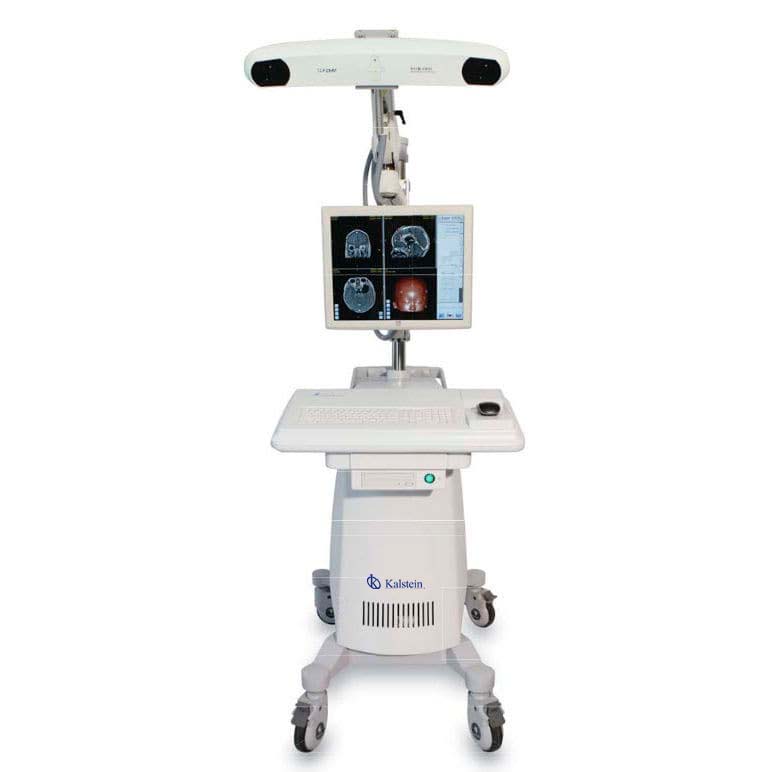
Surgical Navigation Systems YR02143
The Surgical Navigation Systems YR02143 is a cutting-edge computer-aided electromagnetic navigation system, renowned for its application in surgical v
View productOur best-selling optical surgical navigation
Surgical Navigation Systems YR02143
Market Pricing
The pricing for the YR02143 Surgical Navigation System generally varies based on specific configurations and integrated technologies. In the current market, systems of this caliber can range from $100,000 to $200,000, depending on additional features such as software modules and calibration tools. For precise pricing tailored to your specific needs, we encourage you to generate a quote using our Kalstein Plus platform.Frequently Asked Questions
Q: What types of surgeries can the YR02143 be used for? A: The YR02143 is suitable for all ENT and neurological surgeries, particularly beneficial for deep intracranial lesions, low volume intracranial lesions, and minimally invasive surgeries. Q: What imaging modalities are supported? A: It supports DICOM images captured with CT, C-arm, MRI, and fMRI scanners, providing great flexibility and versatility. Q: How does the system handle unexpected power outages? A: The system is designed to automatically save all patient image data and registration information, allowing continuance of the navigation process, thereby minimizing downtime and maintaining surgical momentum.Advantages and Disadvantages
The YR02143 Navigation System offers significant advantages, including high precision, real-time 3D tracking, and surgical convenience through advanced simulation technologies. However, the initial investment can be a consideration for smaller facilities, and training may be required to fully utilize all features.Product Use in the Field
In practical scenarios, the YR02143 is utilized by placing markers on surgical tools, which are tracked throughout the procedure to ensure accurate navigation and lesion identification. This system supports a range of surgical environments, including operating rooms where complex cranial surgeries are performed.Recommendations
To maximize the performance of the YR02143, it is advisable to regularly calibrate the optical and electromagnetic components and ensure all software updates are promptly installed. Encouraging thorough training sessions for surgical staff will enhance the utilization and efficacy of the system.Key Features
- Real-time 3D optical tracking system - Compatible with multiple imaging modalities in DICOM format - Four distinct navigation modes for process oversight - Intelligent calibration software for anatomical changes - Mobile usage with touch monitor or surgeon mouseTechnical Specifications
| Model | YR02143 | ||
| Component | Amount | Description | |
| Optical tracking system | |||
| NDI tracking system | 1 set | Track 3D position and orientation of active or passive markers attached to surgical tools | |
| Image management workstation | |||
| Computer system | 1 set | For 2D image fusion and 3D reconstruction, navigation system | |
| Touch monitor | 1 piece | 19 *, 1280 x 1024 resolution, medical and healthcare grade | |
| Software package | 1 set | Core set (image fusion, surgical planning and navigation, data management) | |
| Software version 1 | 1 piece | Diffusion-tensor-images navigation module | |
| Software version 2 | 1 piece | Needle-Aspiration-Biospy navigation module | |
| Mobile car | |||
| Support trolley with 4 wheels | 1 piece | To support the optical tracking system and image management workstation | |
| Surgical tools | |||
| Navigation probe | 2 pieces | To help the optical measurement system track movement | |
| Microscope probe | 1 piece | To help the optical measurement system track movement | |
| Active marker | 6 pieces | To help quickly recognize critical anatomical structures. | |
| Passive reflective sphere | 10 pieces | To reflect the infrared laser for cameras (in the optical tracking system) to capture | |
| Framework | 2 pieces | To locate passive reflective sphere with 4 pins | |
| Articulated arm | 1 piece | To hold the frame of reference | |
| Clamp adapter | 2 pieces | For the adaptation of another instrument (such as the brain needle during navigation) | |
| Foot-swicht | 1 piece | To help register and navigate | |
| Touchmonitor specification | |||
| Case / bezel color | Beige | Mini VGA D-sub 15-pin; DVI-D | Mini VGA D-sub 15-pin; DVI-D |
Display | Sixe: 19.0 ”diagonal, active matrix TFT | Horizontal: 31.5-80 kHz | Horizontal: 31.5-80 kHz |
| Aspect ratio: 5; 4 | Vertical: 56.3-75 Hz | Vertical: 56.3-75 Hz | |
Useful display area | Horizontal: 14.82 "(376.32 mm) | Type: 100-240 VAC, 50-60 Hz | Type: 100-240 VAC, 50-60 Hz |
| Vertical: 11.85 "(301.06 mm) | Internal DC input power supply | Internal DC input power supply | |
Monitor dimensions | Width: 429mm (16.9 ") | DC input voltage (line): 12V 3.6V | DC input voltage (line): 12V 3.6V |
| Height (including stand): 15.21 "(386 mm) | 48 W max. | 48 W max. | |
| Depth (inc. Base) | Operating; 0 ° C to 40 ° C | Operating; 0 ° C to 40 ° C | |
| Native resolution (optional) | 1280 x 1024 @ 60/70/75 Hz | Storage: -20 ° C to 60 ° C | Storage: -20 ° C to 60 ° C |
| Other supported resolutions | 1280 x 960 / 1,024 x 768 in Hz | Operating: 20% -80% | Operating: 20% -80% |
| Colors | 16.7 million | Storage: 10% -90% | Storage: 10% -90% |
Brightness | LCD panel: 300 cd / m2 | Actual: 17.66 lbs. (8 kg) | Actual: 17.66 lbs. (8 kg) |
| With AccuTouch: 246 cd / m2 | Shipping: 25.10 lbs (11.84) | Shipping: 25.10 lbs (11.84) | |
| With IntellTouch: 276 cd / m2 | 3 years | 3 years | |
| Response time | 20 msec (typical) | Typical 40,000 hours at half brightness | Typical 40,000 hours at half brightness |
| Vision angle | Horizontal (left / right): 89 ° / 89 ° | MTBF; 50,000 hours demonstrated | MTBF; 50,000 hours demonstrated |
| (Typical, from the center) | Vertical (up / down): 89 ° / 89 ° | UL, Cul, fcc, ic, ce, China RoHS, Argentina S mark | UL, Cul, fcc, ic, ce, China RoHS, Argentina S mark |
| Contrast ratio | 1300: 1 (typical) | Two watt / channel speakers located in the display head | Two watt / channel speakers located in the display head |
| Input video format | Analog: (no video card needed) | OSD locks for user and power controls | OSD locks for user and power controls |
Input sync format | Separate horizontal and vertical | OSD extras include volume, treble, bass, balance | OSD extras include volume, treble, bass, balance |
| Synchronization, compound synchronization and | OSD Language (English, Chinese, Spanish, French) | OSD Language (English, Chinese, Spanish, French) | |
| Synchronization in green | Safety lock receptacle | Safety lock receptacle | |
Detailed analysis of optical surgical navigation for an effective and safe choice
What is an optical surgical navigation system?
A surgical navigation system is a device that helps in the planning and execution of surgical procedures in the operating rooms, that is, it allows the guidance of surgical instruments such as a scalpel. It consists of instruments that are connected to screens by sensors with imaging methods. There are two types of navigation system...

Surgical navigation systems optics and cancer
According to the functions of the optical surgical navigation, it allows the detection of cancer in patients, also decreases the arrival times to the specialist of the patient, by means of guidance to identify and overcome the barriers that face and prevent early detection, as well as adequate and timely diagnosis...
Innovation and Outlook for the Evolution of Optical Surgical Navigation: Unraveling the Advantages of Kalstein
Optical Surgical Navigation (OSN) has revolutionized medicine, dramatically changing the way surgery is performed and conceived today. This radical advancement, primarily used in brain, spinal, and orthopedic operations, allows the surgeon a high degree of precision and care during the procedure. The origin of this vanguard comes from a manufacturer whose name echoes in the medical world: Kalstein.
Enhance Your Surgery by Increasing Precision with Optical Surgical Navigation by Kalstein
In the world of modern medicine, technological advancements have revolutionized the way surgical procedures are performed. Optical surgical navigation has transformed surgery leading to improved precision and hence, safer and more effective results.
optical surgical navigation offer catalog
Guides about optical surgical navigation
Complete guides to choose optical surgical navigation
Optimizing Surgical Outcome with Optical Surgical Navigation: Key Advantages of Kalstein
The constant intersection and interaction of medical science and modern technology have led to a series of astonishing achievements and advances. One of these is optical surgical navigation. As a leading manufacturer in the market for labor
Leer más
Innovation in Surgery: Optical Surgical Navigation for Precise Outcomes
One of the most significant advancements in surgery over the past few decades has been the introduction of optical surgical navigation. This innovative technology provides a detailed 3D image of the treatment area, enabling surgeons to make
Leer másOptical Surgical Navigation: Navigating with Precision in the Surgical Field
Optical surgical navigation is an innovative technique that allows surgeons to perform procedures with greater precision and safety. As a manufacturer and supplier of high-quality laboratory equipment, we recognize the importance of providi
Leer más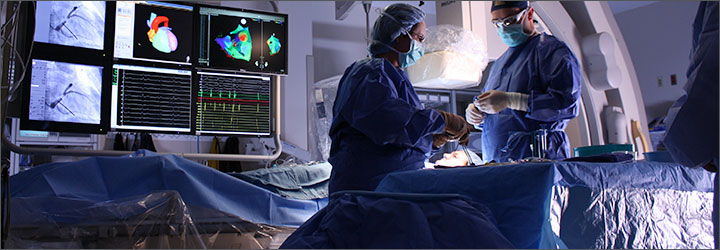
Applications of the Optical Surgical Navigator in Neurology
In a medical field as complex as neurology, new applications are being found to the optical surgical navigator. This is partly because medical information technologies have made tremendous progress over the last two decades. A significant a
Leer másFrequently asked questions about Optical Surgical Navigation
How to know the prices of Optical Surgical Navigation?
To know the price of Optical Surgical Navigation, please send us an email with your request through the contact form AQUI.
What are the delivery times for Optical Surgical Navigation?
Delivery time depends on stock availability and freight type (air or sea). In stock: air 15-30 days, sea 45-60 days. Out of stock: air 30-60 days, sea 60-90 days.
How to make a purchase of Optical Surgical Navigation?
You can buy by email ([email protected]), phone (+33 (0) 1 70 39 26 50) or through the official Kalstein website in your country.
How does the warranty work for Optical Surgical Navigation?
All Kalstein equipment comes with a 1-year warranty against manufacturing defects. The warranty does not cover damage from improper installation or misuse. See our «terms and conditions» AQUI.
Can I request a quote online for Optical Surgical Navigation?
Yes, you can request a quote for the Kalstein equipment you are interested in directly from our official website. Click AQUI.