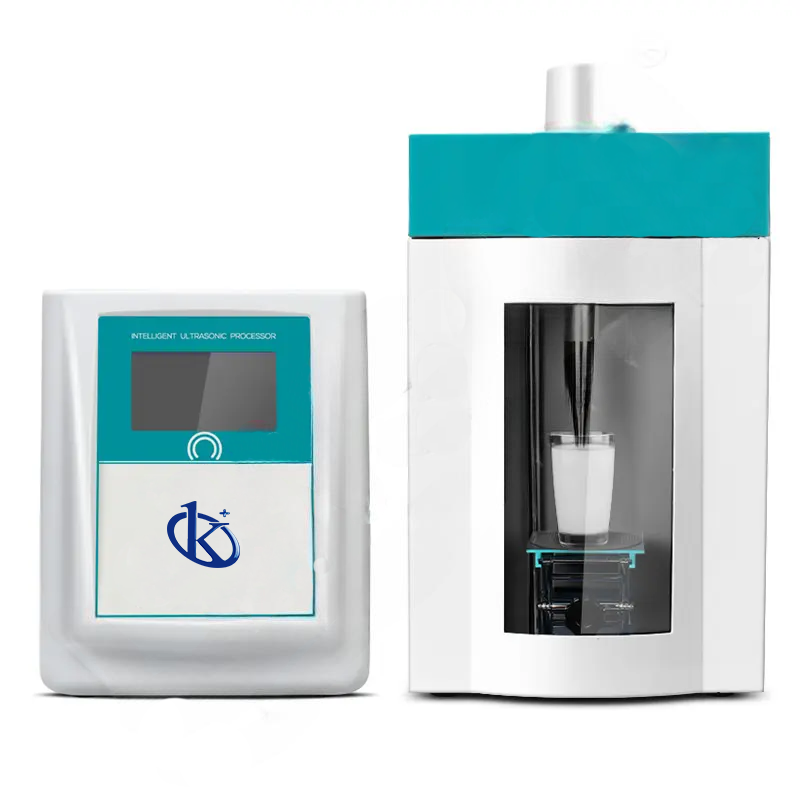
Integrating Ultrasonic Homogenizers with LIMS for Enhanced Data Digitalization
As laboratory environments evolve, the integration of ultrasonic homogenizers with Laboratory Information Management Systems (LIMS) has become vital. This synergy not only streamlines workflows but also significantly enhances data digitalization. Ultrasonic homogenizers are renowned for their efficiency in sample preparation across various applications, including pharmaceuticals, food testing, and materials science. Understanding how to optimize these devices through effective LIMS integration can lead to improved data management, compliance, and overall laboratory productivity.
Understanding the Importance of LIMS Integration in Ultrasonic Homogenization
LIMS plays a crucial role in modern laboratories, providing a framework for data management, sample tracking, and compliance with industry standards. Integrating ultrasonic homogenizers with LIMS facilitates real-time data capture and analysis. This process is essential for achieving high-quality results while minimizing human error. Moreover, the digitalization of workflows helps maintain traceability, which is critical in regulated industries.
Comparative Overview of Ultrasonic Homogenizers
| Model | Power (Continuous) | Mixing Capacity | Best for |
|---|---|---|---|
| YR05015 | 1.5 – 150W | 0.1 – 150 ml | Small sample volumes |
| YR05016 | 2-5 – 250 W | 0.1 – 300 ml | Standard laboratory tasks |
| YR05017 | 10 – 650 W | 0.1 – 500 ml | Medium sample processing |
| YR05018 | 10 – 900 W | 0.1 – 600 ml | High-throughput environments |
| YR05019 | 20 – 1,200W | 1 – 1,000 ml | Large batch processing |
| YR05020 | 50 – 1,800W | 1 – 1,200 ml | Heavy-duty applications |
Key Features Enhancing Integration and Digitalization
Modern ultrasonic homogenizers come equipped with advanced features that facilitate seamless integration with LIMS. Models like YR05019 and YR05020 offer computer communication options, enabling automatic data transfer to LIMS. These features ensure that operators can maintain accurate records of sample processing, power settings, and operational times, fostering a digital environment where data integrity is paramount.
Connectivity Protocols and Standards
To effectively integrate ultrasonic homogenizers with LIMS, understanding the supported connectivity protocols is essential. Many homogenizers, including the YR05018, utilize standard communication protocols such as HL7 and ASTM, ensuring compatibility with most LIMS systems. This compatibility enables laboratories to automate data collection, reduce manual entry errors, and enhance overall efficiency.
Data Sovereignty and Compliance
When integrating ultrasonic homogenizers into LIMS, laboratories must consider data sovereignty and compliance with regulations. Ensuring that the LIMS adheres to standards such as ISO 17025 becomes crucial, as it helps maintain the quality and reliability of laboratory results. By using models like YR05017, which offer features that support traceability and data integrity, laboratories can confidently meet these standards while optimizing workflows.
Common Mistakes and How to Avoid Them
One of the most common mistakes in LIMS integration is underestimating the importance of thorough training for laboratory personnel. Ensure that all users are well-versed in both the ultrasonic homogenizer and LIMS features to avoid operational errors. Additionally, neglecting to regularly update software can lead to compatibility issues; therefore, maintaining current software versions is essential for smooth operation.
Frequent Maintenance and Calibration Requirements
Regular maintenance and calibration of ultrasonic homogenizers are necessary to ensure optimal performance. Establishing a calibration schedule is crucial, especially for models like YR05015 and YR05016, which are used in sensitive applications. Integrating these maintenance protocols into LIMS can help track calibration dates and remind laboratory personnel of upcoming requirements, thus ensuring compliance and operational efficiency.
Comparison of Available Models
| Model | Connectivity | Protocols Supported | Integration Effort | Best for |
|---|---|---|---|---|
| YR05015 | USB | HL7, ASTM | Low | Small laboratories |
| YR05016 | USB | HL7, ASTM | Medium | Standard tasks |
| YR05017 | Ethernet | HL7, ASTM | Medium | Medium throughput |
| YR05018 | Wi-Fi | HL7, ASTM | High | High-throughput |
| YR05019 | Ethernet | HL7, ASTM | High | Large batches |
| YR05020 | Wi-Fi | HL7, ASTM | High | Heavy-duty use |
Frequently Asked Questions
What are the benefits of LIMS integration with ultrasonic homogenizers?
LIMS integration with ultrasonic homogenizers like the YR05020 maximizes data tracking, reduces human error, and enhances compliance with standards like ISO 17025. Laboratories can streamline workflows by automating data collection and ensuring accurate sample management.
How can ultrasonic homogenizers support regulatory compliance in laboratories?
Ultrasonic homogenizers, particularly models like YR05017, help maintain compliance with laboratory standards by providing detailed data logs that support traceability and data integrity, critical for regulations such as ISO 17025.
What connectivity protocols should be considered for ultrasonic homogenizers in LIMS?
Protocols such as HL7 and ASTM are essential for integrating ultrasonic homogenizers like the YR05015 with LIMS. These protocols facilitate effective data communication and enhance overall laboratory efficiency.
How often should ultrasonic homogenizers be calibrated for optimal performance?
Calibration for ultrasonic homogenizers should be performed regularly, ideally according to a predefined schedule. Models such as YR05016 should be checked annually to ensure compliance and operational efficiency.
What integration efforts are required for ultrasonic homogenizers with LIMS?
The integration effort varies by model; for example, the YR05018 requires medium effort due to its advanced connectivity options, while the YR05015 is simpler to integrate and is suitable for smaller labs.
Which ultrasonic homogenizer is best suited for high-throughput labs?
The YR05019 is an excellent choice for high-throughput labs, thanks to its robust power and mixing capacity, making it suitable for large-scale sample processing integrated with LIMS.
How can laboratories ensure data integrity when using ultrasonic homogenizers?
Ensuring data integrity involves using accurate models like YR05020 that support real-time data transfer to LIMS, which helps maintain accurate records and compliance with industry standards.
Why is operator training important when integrating LIMS with ultrasonic homogenizers?
Operator training is crucial because it minimizes errors and ensures that lab personnel can efficiently navigate both the ultrasonic homogenizer and the LIMS software, particularly for complex models like YR05018.
If you are looking for a fusion of innovation and quality, you have come to the right place. At Kalstein, we offer you the luxury of exploring our exclusive catalog of laboratory equipment. We manufacture every device to the highest standards of excellence. Our intuitive and seamless online purchasing channels are designed for your convenience, securing the most competitive prices. Hesitate no longer — we bring science to life, it is time to become part of our community.