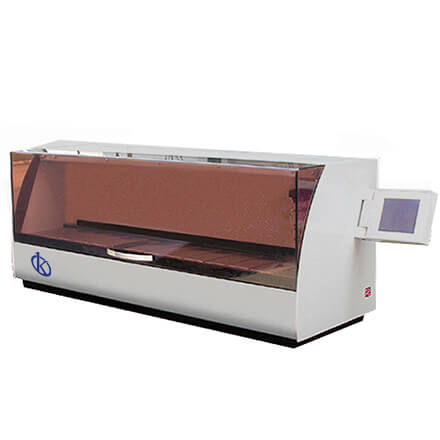
Evaluating Return on Investment for Automatic Slide Stainers in Laboratories
Automatic Slide Stainers play a crucial role in laboratory settings, providing efficiency and consistency in staining processes. This article delves into the return on investment (ROI) and cost-benefit analysis pertinent to these devices, particularly focusing on three models: YR435, YR435-1, and YR436-1. By understanding the financial implications and operational efficiencies these stainers offer, laboratories can make informed decisions that enhance productivity and reduce costs.
Understanding the Importance of ROI in Laboratory Equipment
Return on investment (ROI) is a critical measure for laboratories when considering new equipment purchases. It encompasses the benefits received in relation to the costs incurred over a specific period. Evaluating ROI for Automatic Slide Stainers involves analyzing both capital expenditures (CAPEX) and operational expenditures (OPEX), influencing the overall budget and efficiency of laboratory operations.
Key Factors Influencing ROI for Automatic Slide Stainers
Several factors contribute to ROI when using Automatic Slide Stainers. These include the initial purchase price, expected lifespan, maintenance costs, and throughput capabilities. Understanding these variables allows laboratories to project potential savings and earnings based on usage frequency and operational efficiency.
Comparison of Available Models
| Model | CAPEX (USD) | Cost per Test | Payback Period (months) | Best for |
|---|---|---|---|---|
| YR435 | 3800.00 | 0.50 | 12 | High volume labs requiring basic staining |
| YR435-1 | 10600.00 | 0.25 | 10 | Specialty labs needing advanced staining capabilities |
| YR436-1 | 2800.00 | 0.40 | 8 | Compact setups with space constraints |
Cost-Benefit Analysis for Automatic Slide Stainers
A comprehensive cost-benefit analysis for Automatic Slide Stainers should consider both quantitative and qualitative factors. The quantitative aspect includes purchase price, maintenance, and operational costs against the cost savings generated through efficiency and reduced labor. Qualitatively, the benefits such as improved quality of staining, consistency, and reduced error rates play an important role.
Assessing Throughput and Efficiency Gains
Throughput is a vital metric when evaluating the efficiency of Automatic Slide Stainers. For instance, the YR435-1 model can process 400 slides per hour, thereby significantly enhancing laboratory workflow compared to manual staining methods. The increase in throughput translates directly to better ROI, as more tests can be completed in a shorter timeframe, which can lead to increased revenue streams.
Common Mistakes and How to Avoid Them
When assessing ROI for Automatic Slide Stainers, laboratories often make mistakes such as neglecting to account for long-term operational costs or failing to analyze the full scope of benefits. To avoid these pitfalls, comprehensive financial modeling should be conducted, including all associated costs and projected savings over the equipment's lifespan.
Frequently Asked Questions
How is ROI calculated for the YR435 Automatic Slide Stainer?
The ROI for the YR435 can be calculated by considering its CAPEX of $3800 and its operational costs compared to the anticipated cost savings through efficiency gains. With an estimated cost per test of $0.50, this model allows for a payback period of approximately 12 months.
What are the specific benefits of using the YR435-1 in a laboratory?
The YR435-1 offers advanced capabilities, processing up to 400 slides per hour, which enhances laboratory throughput. With a lower cost per test of $0.25, this model provides significant cost savings and a faster payback period, making it ideal for specialty labs.
How does the YR436-1 compare in terms of space efficiency?
The YR436-1 is designed to occupy a minimal footprint, making it suitable for compact laboratory settings. With dimensions of 925 x 250 x 260 mm, it efficiently integrates into tight spaces without sacrificing performance.
What factors should be considered for long-term ROI on Automatic Slide Stainers?
Long-term ROI considerations for Automatic Slide Stainers include initial purchase price, maintenance costs, operational efficiency, and throughput capabilities. Accurately projecting these factors helps laboratories assess the equipment's value over time.
How can cost per test be reduced with Automatic Slide Stainers?
Cost per test can be lowered by optimizing the use of reagents and minimizing waste through effective workflows and automation. Models like the YR435-1, which can handle multiple staining programs, facilitate this cost reduction.
What are the potential savings from automating slide staining processes?
By automating slide staining processes with models like the YR435, laboratories can expect significant savings in labor costs, reduced reagent waste, and improved staining quality, ultimately leading to a better return on investment.
How does the durability of Automatic Slide Stainers impact ROI?
Durability impacts ROI by influencing maintenance costs and overall lifespan. High-quality materials in models like YR436-1 ensure stable operation and longevity, reducing the need for frequent replacements and repairs, ultimately aiding ROI.
What role does throughput play in justifying the purchase of Automatic Slide Stainers?
Throughput is critical as it directly affects the number of tests completed in a given timeframe. Models like the YR435-1, with a high throughput of 400 slides per hour, justify their purchase by enabling labs to increase productivity and revenue.
If you are looking for a fusion of innovation and quality, you have come to the right place. At Kalstein, we offer you the luxury of exploring our exclusive catalog of laboratory equipment. We manufacture every device to the highest standards of excellence. Our intuitive and seamless online purchasing channels are designed for your convenience, securing the most competitive prices. Hesitate no longer — we bring science to life, it is time to become part of our community.