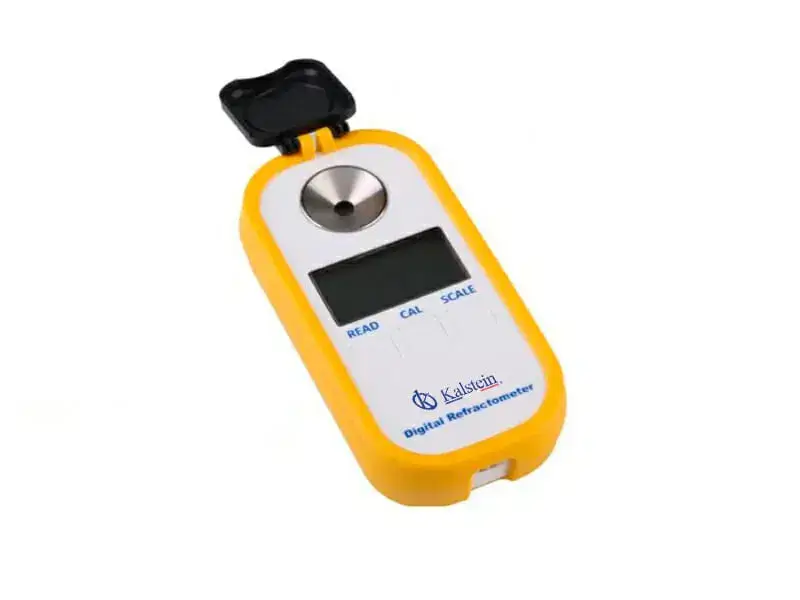
Digital Salinity Refractometers in Academic Research and University Projects
Digital salinity refractometers play a crucial role in various laboratory settings, particularly within academic research and university projects. As educational institutions push for more hands-on experience and data-driven learning, these devices offer students and researchers the capability to obtain precise salinity measurements crucial for numerous experiments and studies in fields such as environmental science, biology, and chemistry. In this article, we will delve into their specific applications, compare multiple models, and suggest best practices for integrating these tools into academic frameworks.
Understanding the Role of Digital Salinity Refractometers in Research
In academic research, digital salinity refractometers are essential for measuring the concentration of salts in solutions, which is vital in studies involving marine biology, agriculture, and chemistry. Researchers can utilize these devices to analyze seawater samples, understand soil salinity, and explore the properties of various ionic compounds. The automatic temperature compensation (ATC) feature enhances the accuracy of readings by allowing for temperature variations without manual adjustments, making these refractometers particularly user-friendly for research scenarios.
Furthermore, the precision and ease of use associated with digital refractometers allow students to focus on the analytical aspects of their research without being bogged down by the complexities of manual measurement techniques. This accessibility supports better learning and encourages students to engage more deeply with their research topics.
Comparison of Available Models
| Model | Measurement Range | Minimum Division | Accuracy | Automatic Temperature Compensation | Best for |
|---|---|---|---|---|---|
| YR05953 | 0.0–28.0% | 0.10% | ±0.1% | Yes | Marine biology studies |
| YR05954 | 0–280‰ | 1‰ | ±1‰ | Yes | Agricultural salinity testing |
| YR05955 | 1.000–1.217 | 0.001 | ±0.002 | Yes | Chemical compositions research |
| YR05956 | 1.3330–1.3900nD | 0.0001nD | ±0.0003nD | Yes | Refractive index measurements in solutions |
| YR05957 | 0—100‰ | 1‰ | ±2‰ | Yes | General salinity assessments |
| YR05958 | 0–57‰ | 1‰ | ±2‰ | Yes | Clinical applications in salinity |
Common Mistakes and How to Avoid Them
When utilizing digital salinity refractometers in academic research, common pitfalls can hinder effective results. One frequent mistake is neglecting to calibrate the refractometer before each use, which can lead to inaccurate measurements. To avoid this, establish a routine calibration schedule based on the frequency of use and the specific requirements of your research. Additionally, failing to take environmental factors into account, such as temperature and humidity, can affect salinity readings. It’s essential to understand the operational limits of your device and apply proper storage and handling techniques.
Moreover, researchers should be wary of contamination in samples, which can distort results. Proper sample collection techniques and clean transfer methods can mitigate this risk, ensuring that data collected during experiments is reliable and valid.
Specific Applications in Academic Settings
Marine Biology Studies
In marine biology, understanding the salinity of seawater is crucial for studying aquatic ecosystems and organisms. Digital refractometers, such as the YR05953, allow students to quickly measure salinity levels in various water samples, facilitating a better understanding of marine environments and the effects of salinity on aquatic life.
Agricultural Research
For agricultural studies, salinity levels in soil and irrigation water can significantly impact crop yield. The YR05954 model is particularly effective for testing salinity concentrations, helping agricultural researchers develop strategies for managing salinity in farming practices.
Chemical and Physical Properties Research
In chemistry labs, refractometers like the YR05955 provide vital information on the physical properties of solutions. Researchers can determine the concentration of solutes, allowing for accurate experimentation related to solution behavior and reactions.
Best Practices for Integrating Refractometers into Academic Curricula
Integrating digital salinity refractometers into academic curricula involves several best practices to enhance learning and research. Firstly, it is advisable to incorporate hands-on training sessions that familiarize students with the operation and calibration of the devices. This practical approach equips students with the necessary skills to utilize refractometers confidently.
Furthermore, research projects should be designed to emphasize real-world applications of salinity measurements. Encourage students to formulate hypotheses, conduct experiments, and analyze results using refractometer data. This inquiry-based learning fosters critical thinking and reinforces the importance of accurate measurements in scientific endeavors.
Frequently Asked Questions
What are the main benefits of using digital salinity refractometers in research?
Digital salinity refractometers provide quick and accurate measurements, essential for various research applications. Models like the YR05953 ensure reliable salinity readings, which are crucial for experiments in marine biology and environmental science.
How can I effectively calibrate digital salinity refractometers for academic use?
To calibrate digital salinity refractometers effectively, use standard solutions with known salinity values before each use. This ensures accuracy in readings, especially with models such as the YR05954, which is ideal for agricultural applications.
What common errors should be avoided when using salinity refractometers in labs?
Common errors include improper calibration and sample contamination. For instance, neglecting to calibrate the YR05955 before measuring can lead to inaccurate results, affecting research conclusions.
Which model is best for educational purposes in a university lab?
The YR05956 is an excellent choice for educational labs due to its easy-to-read digital display and accuracy. It is ideal for teaching students about the refractive index and salinity measurements in various solutions.
How does automatic temperature compensation improve refractometer accuracy?
Automatic temperature compensation (ATC) adjusts the readings based on temperature fluctuations, ensuring accuracy across a range of conditions. This feature is particularly beneficial in models like the YR05957, used for general salinity assessments.
What factors should be considered when selecting a digital salinity refractometer for research?
Factors include measurement range, accuracy, ease of use, and features like ATC. The YR05958, for example, is suitable for clinical applications due to its precise salinity readings.
How can digital salinity refractometers aid in environmental research?
These devices enable researchers to analyze salinity levels in various ecosystems, crucial for understanding water quality and its impact on biodiversity. Models like the YR05953 are effective for marine research environments.
Conclusion and Call to Action
Digital salinity refractometers are invaluable tools for academic research and university projects. They offer precision and ease of use, making them ideal for experiments in diverse fields such as marine biology, agriculture, and chemistry. By integrating these devices into educational curricula, institutions can enhance learning experiences and foster a deeper understanding of scientific concepts.
If you are looking for a fusion of innovation and quality, you have come to the right place. At Kalstein, we offer you the luxury of exploring our exclusive catalog of laboratory equipment. We manufacture every device to the highest standards of excellence. Our intuitive and seamless online purchasing channels are designed for your convenience, securing the most competitive prices. Hesitate no longer — we bring science to life, it is time to become part of our community.