
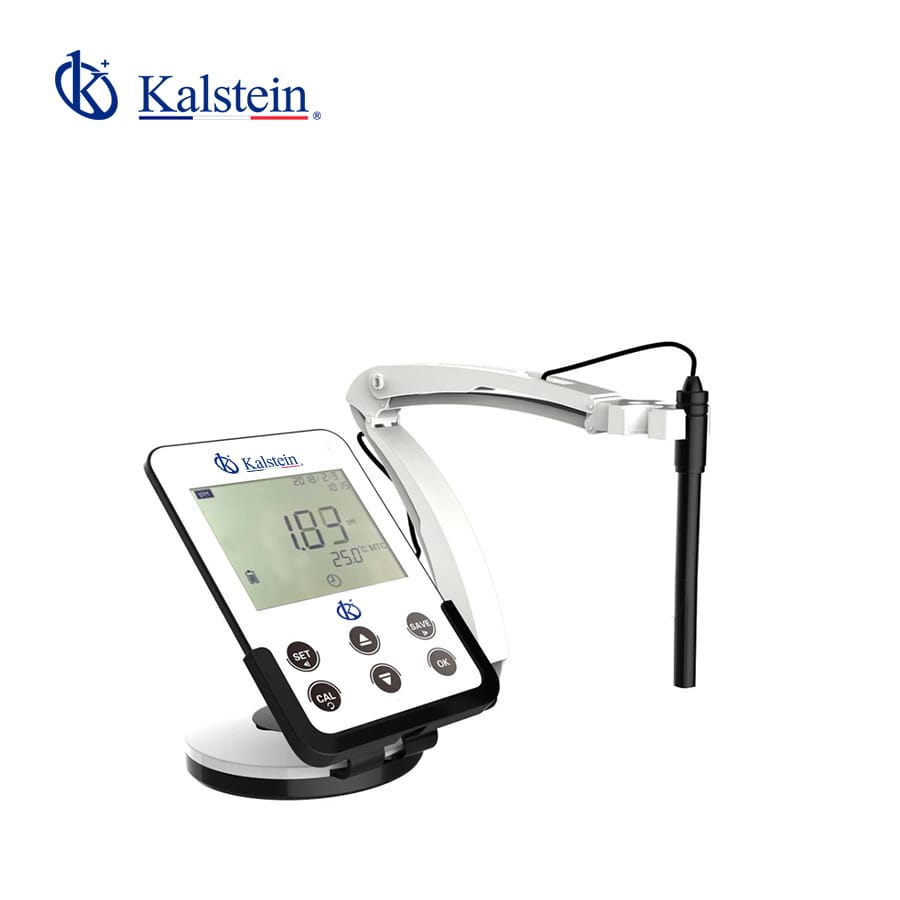
The Benchtop Dissolved Oxygen Meter YR01832 from Kalstein and the MultiLab 4010-2W from WTW are both renowned for their precision and efficiency in measuring dissolved oxygen levels in various environments. Designed for laboratory use, these benchtop meters ensure that scientists and researchers can accurately monitor oxygen levels in water samples, which is critical for a range of applications—from environmental studies to aquaculture and wastewater treatment.
The YR01832 model from Kalstein stands out with its modern design and instrumental accuracy. Its advanced technology and user-friendly interface make it a top choice for many laboratories aiming for excellence. On the other hand, the MultiLab 4010-2W by WTW is also popular for its reliability and dual-channel capabilities, although it may not match the elegance and intuitive operation offered by Kalstein’s model. Let’s delve into a detailed comparison to aid your decision-making process.
| Features | Kalstein YR01832 | WTW MultiLab 4010-2W |
|---|---|---|
| Design | Modern, User-Friendly | Practical, Dual-channel |
| Measurement Range | 0-20 mg/L | 0-50 mg/L |
| Price | Competitive | Moderate |
| Calibration | Automatic | Manual |
| Portability | Lightweight | Bulky |
How They Work
Both products are designed to measure dissolved oxygen levels in liquid samples accurately. The Kalstein YR01832 utilizes a state-of-the-art sensor system, permitting automatic calibration and real-time data output, which simplifies the operation and increases reliability. Meanwhile, the WTW MultiLab 4010-2W, though also designed for precise measurements, requires manual calibration. Its dual-channel capability allows simultaneous measurements of different parameters, providing a comprehensive analysis.
Purpose
These benchtop dissolved oxygen meters are vital in various sectors. Kalstein’s YR01832 and WTW’s MultiLab 4010-2W both serve critical roles in environmental monitoring, research, aquaculture, and industrial processes where oxygen concentration monitoring is crucial. Their applications support effective ecosystem management and process optimization, ensuring the sustainability of aquatic environments and efficiency in production processes.
Types
While both are benchtop models, their distinct design features set them apart. The Kalstein YR01832 is tailored for laboratories that prioritize ease of use and efficiency, featuring an intuitive interface and an ergonomic design. In contrast, the WTW 4010-2W caters to users needing multi-parameter analysis simultaneously, albeit at the cost of increased complexity in handling and calibration.
Market Pricing
In the market for benchtop dissolved oxygen meters, prices can vary significantly based on features and brand reputation. The Kalstein YR01832 offers a competitive pricing structure, making it an attractive option for both budding and well-established labs. The WTW MultiLab 4010-2W, known for its multi-channel capabilities, is priced moderately higher, aligning with its technical offerings. For a precise quotation tailored to your needs, you can request a quote easily through the Kalstein Plus platform.
Frequently Asked Questions
What are the key differences between Kalstein YR01832 and WTW 4010-2W?
The main differences lie in their calibration methods, ease of use, and design. Kalstein provides automatic calibration and a user-friendly design, while WTW offers dual-channel capabilities but requires manual calibration.
Can these devices be used in fieldwork?
While mainly designed for laboratory use, these benchtop models can be adapted for fieldwork, although they are not as portable as handheld devices. The Kalstein model, being lightweight, offers a slight edge in this aspect.
Why is dissolved oxygen measurement important?
Dissolved oxygen measurement is crucial for monitoring the health of aquatic systems, ensuring optimal conditions for aquaculture, and maintaining the balance in ecological and industrial processes.
Advantages and Disadvantages
Kalstein YR01832 Advantages: Offers automatic calibration, modern design, and user-friendly interface, making operations seamless. Its competitive pricing is another benefit, aligning quality with affordability.
Disadvantages: Limited to a single parameter measurement at a time.
WTW MultiLab 4010-2W Advantages: Dual-channel capabilities allow simultaneous multi-parameter measurements, which can be advantageous for comprehensive data collection.
Disadvantages: Requires manual calibration and has a more complex user interface.
Field Use
Effective use of these meters involves understanding their specifications, ensuring proper calibration, and maintaining the sensors to guarantee accurate readings. In practice, the Kalstein YR01832 excels in environments where simplicity and reliability are paramount, such as in controlled laboratory settings or aquaculture facilities.
Recommendations
For optimal performance, regularly maintain the device by cleaning sensors and updating software as recommended by the manufacturer. Leverage the automatic calibration features of the Kalstein YR01832 to minimize errors, and routinely check for software updates that could enhance the device’s functionality. For field adaptations, ensure the use of protective casings to shield the equipment during transit.
If you’re searching for a blend of innovation and quality, you’ve come to the right place. At Kalstein, we offer you the luxury of exploring our exclusive laboratory equipment catalog. We manufacture each piece of equipment with a level of excellence. Our intuitive and agile online purchasing channels are designed for your convenience, ensuring the most friendly prices. Don’t hesitate any longer, we bring science to life, it’s time to become part of our community. https://kalstein.pt/product/benchtop-dissolved-oxygen-meter-yr01832/.