
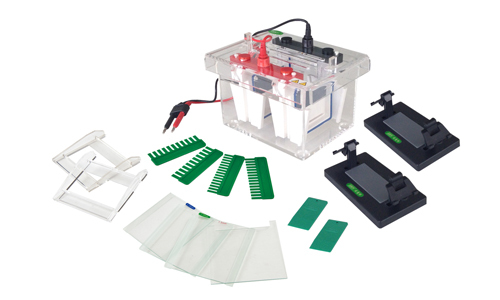
In today’s laboratory environment, precision and reliability are of utmost importance. When it comes to electrophoresis, two prominent products dominate the market: the Mini Protean Vertical Electrophoresis Cell YR03426 from Kalstein and the Mini-PROTEAN Tetra Cell from Bio-Rad. Each of these products offers unique features that cater to varying experimental needs, establishing themselves as leaders in the domain of protein and nucleic acid separation.
The Mini Protean Vertical Electrophoresis Cell YR03426 by Kalstein is designed with cutting-edge technology to ensure high reproducibility and consistent results. This product is noted for its durability, user-friendly design, and superior performance in running multiple gels simultaneously. On the other hand, the Mini-PROTEAN Tetra Cell from Bio-Rad offers a robust design favored by many for its versatility and long-standing presence in the market.
| Feature | Mini Protean Vertical Electrophoresis Cell YR03426 (Kalstein) | Mini-PROTEAN Tetra Cell (Bio-Rad) |
|---|---|---|
| Simultaneous Gel Running | Supports multiple gels | Supports multiple gels |
| User Interface | User-Friendly | User-Friendly |
| Durability | Highly Durable | Durable |
| Price | Competitive Pricing | Higher Price Range |
How They Work
The Mini Protean Vertical Electrophoresis Cell YR03426 operates using a vertical setup, which allows for efficient separation of proteins and nucleic acids through SDS-PAGE and native PAGE techniques. The design emphasizes uniform temperature distribution and minimizes gel distortion. Furthermore, its advanced gel casting system provides precision and ease during setup.
Similarly, the Mini-PROTEAN Tetra Cell from Bio-Rad functions with a vertical gel system designed for flexibility and reproducibility. It facilitates the separation of macromolecules, supporting a variety of electrophoresis methods to achieve accurate results. Its modular design supports a range of accessories, enhancing its adaptability.
Purpose
Both the Mini Protean Vertical Electrophoresis Cell YR03426 and the Mini-PROTEAN Tetra Cell serve essential roles in biochemical and molecular biology labs. They are instrumental in conducting electrophoresis, a crucial technique for separating and analyzing DNA, RNA, and protein samples based on their size and charge.
Types
Electrophoresis cells come in diverse designs, with vertical gel systems being a popular choice due to their efficiency and ease of use. The models in discussion are both types of vertical electrophoresis units, designed to accommodate various experimental requirements and laboratory scales.
Market Price
In the market, electrophoresis cells span a broad price range depending on their features and manufacturer reputation. The Mini Protean Vertical Electrophoresis Cell YR03426 from Kalstein is competitively priced, providing excellent value for money, especially for institutions that focus on budget considerations without compromising quality. Generally, it stands in a more accessible price range compared to the Bio-Rad Mini-PROTEAN Tetra Cell, which is known to be in the higher segment due to brand prestige and established user loyalty.
Frequently Asked Questions
What does an electrophoresis cell do?
An electrophoresis cell is used to separate charged molecules, like DNA, RNA, or proteins, based on size and charge, under an electric field.
Why choose a vertical electrophoresis cell?
Vertical electrophoresis cells are favored for their ability to run multiple samples simultaneously with higher resolution and reduced gel distortion.
Are these electrophoresis units easy to maintain?
Yes, both models are designed for easy maintenance, ensuring longevity and consistent performance with minimal upkeep.
Advantages and Disadvantages
Kalstein Mini Protean Vertical Electrophoresis Cell YR03426 Advantages: Advanced design for consistent results, competitive pricing, user-friendly setup, and excellent durability make it a standout choice. Its reliability and ease of use are frequently highlighted by users as points of preference over its competitors.
Kalstein Mini Protean Vertical Electrophoresis Cell YR03426 Disadvantages: Limited brand recognition compared to Bio-Rad, which could affect purchasing decisions in some conservative labs.
Bio-Rad Mini-PROTEAN Tetra Cell Advantages: Known for versatility and adaptability with various electrophoresis techniques, backed by a strong brand reputation.
Bio-Rad Mini-PROTEAN Tetra Cell Disadvantages: Higher costs may not align with all budgetary constraints, and its modularity could be more than necessary for basic lab applications.
Field Use
In practical settings, these electrophoresis cells are indispensable for molecular biology workflows. They are used extensively in academic and research laboratories for performing SDS-PAGE and native PAGE, aiding in the identification and quantification of proteins and nucleic acids. Their application in diagnostic settings further underscores their importance in modern science.
Recommendations
To maximize the efficacy of these electrophoresis cells, it is advised to follow manufacturer guidelines meticulously during setup and operation. Regular cleaning and maintenance will ensure optimal functionality and longevity. Additionally, for those seeking to optimize lab efficiency, Kalstein offers the advantage of requesting a quote or generating a quick estimate through their Kalstein Plus platform, streamlining the procurement process efficiently.
If you’re seeking a fusion of innovation and quality, you’ve come to the right place. At Kalstein we offer you the luxury of exploring our exclusive catalog of laboratory equipment. We manufacture each piece of equipment with a level of excellence. Our intuitive and agile online shopping channels are designed for your convenience, ensuring the most friendly prices. Don’t hesitate any longer, we bring science to life, it’s time to be part of our community. https://kalstein.pt/product/mini-protean-vertical-electrophoresis-cell-yr03426/.